





Pennsylvania House votes to raise the state's minimum wage
Taking advantage of their newly minted majority, Democrats have achieved a longtime progressive policy goal.
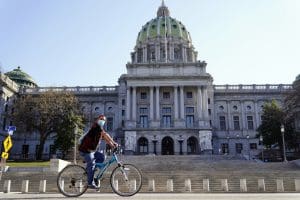
All but one member of the Democratic majority and two Republicans in the Pennsylvania state House voted on Tuesday to raise the state’s minimum wage.
H.B. 1500, which still has to pass the Republican-controlled Senate and be signed by Democratic Gov. Josh Shapiro to become law, would incrementally raise the minimum wage to $15 an hour over four years and peg subsequent increases to inflation. The tipped wage would increase to $9 by 2026 from its current minimum, $2.83.
“After a long, hard battle, the Pennsylvania House Democratic Caucus is raising the minimum wage,” House Speaker Joanna McClinton said after the vote, according to the Pennsylvania Capital-Star.
The value of the $7.25 minimum wage has depreciated dramatically since it took effect in 2009: A 2022 study from the Center for American Progress found that the federal minimum wage is worth 26% less than it was that year when adjusted for inflation.
Raising the minimum wage to $15 — and above — has been a major priority for progressives for the past decade. Fight for $15, a political and labor movement that in part grew out of the Occupy Wall Street movement, advocates for raising the minimum wage to $15 an hour. Together with labor unions and nonprofit organizations, the movement helped bring the fight to public attention with a series of nationwide strikes and a public advocacy campaign.
Thirteen states — New York, California, Massachusetts, Connecticut, Maryland, Virginia, Delaware, New Jersey, Illinois, Washington, Hawaii, Florida and Nebraska — have raised their state minimum wage to or above $15, or are currently in the process of raising it to $15 through annual increases. A $15 state minimum wage was one of Shapiro’s campaign promises, and it has been a longtime goal of progressive organizations in the state.
“Tuesday evening’s vote is the first step towards Pennsylvanians being guaranteed something closer to a living wage by 2026, and permanently indexed to annual inflation thereafter,” Kadida Kenner, the CEO of the New Pennsylvania Project, a progressive voting rights group, said in a statement. “I applaud this long overdue first step towards establishing a living wage in Pennsylvania, but note it is only the first step.”
Even though Republican control of the state Senate hurts the bill’s chances, it’s still possible that some form of minimum wage increase could pass. Republican Sen. Dan Laughlin introduced a bill last month with the same year-over-year increases that are contained in the House bill, and, the Pennsylvania Capital-Star reported, that House bill is likely to be used as a bargaining chip in the upcoming state budget negotiations.
But earlier this month, Pennsylvania Senate Majority Leader Joe Pittman told reporters that while a minimum wage increase of some kind may be on the table, “$15 an hour is not a practical number.”
“We’ll see if the House sends us a minimum wage bill. What it looks like and then we can react,” he added.
In 2019, Pennsylvania came close to increasing its minimum wage. Then-Gov. Tom Wolf, a Democrat, struck a deal with Senate Republicans to raise the minimum to $9.50 by 2022, but House Republicans ultimately rejected the deal.
Published with permission of The American Independent Foundation.
Recommended
Biden calls for expanded child tax credit, taxes on wealthy in $7.2 trillion budget plan
President Joe Biden released his budget request for the upcoming fiscal year Monday, calling on Congress to stick to the spending agreement brokered last year and to revamp tax laws so that the “wealthy pay their fair share.”
By Jennifer Shutt, States Newsroom - March 11, 2024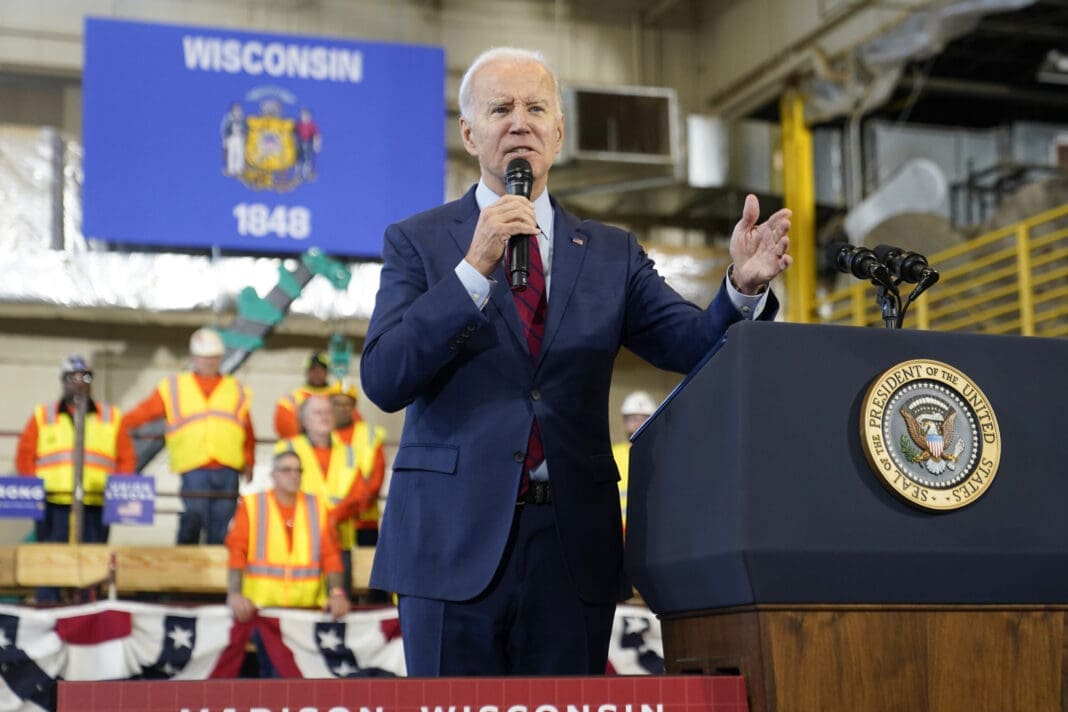
December jobs report: Wages up, hiring steady as job market ends year strong
Friday’s jobs data showed a strong, resilient U.S. labor market with wages outpacing inflation — welcome news for Americans hoping to have more purchasing power in 2024.
By Casey Quinlan - January 05, 2024
Biden’s infrastructure law is boosting Nevada’s economy. Sam Brown opposed it.
The Nevada Republican U.S. Senate hopeful also spoke out against a rail project projected to create thousands of union jobs
By Jesse Valentine - November 15, 2023